Cavity control
Components can remain associated with their mould cavity for inspection, sampling and fault investigation.
Keep multi-cavity components ordered from the moment they leave the mould. Controlled placement, cavity tracking and reject routing can prevent mixed output and give downstream operations a predictable product flow.
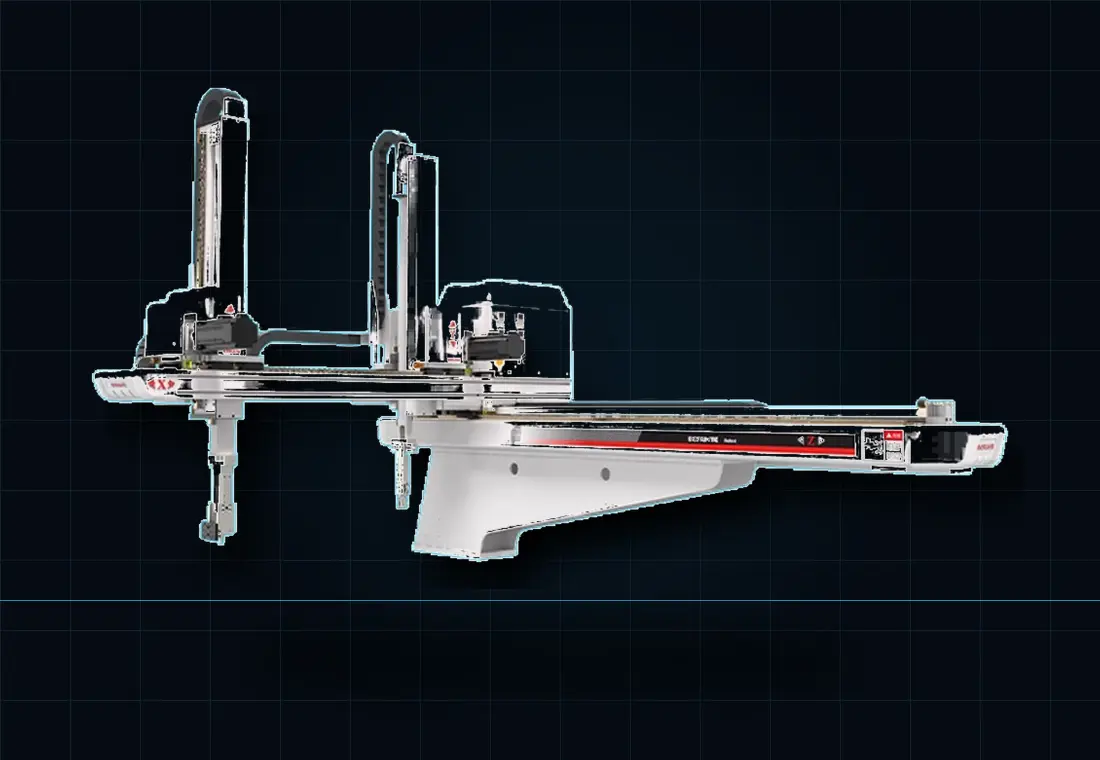
The robot is one element in a coordinated production system. The strongest result comes from defining the product, mould sequence and next operation together.
Components can remain associated with their mould cavity for inspection, sampling and fault investigation.
Parts can be placed into separate lanes, nests, trays, bins or downstream fixtures instead of falling into a mixed container.
Known startup shots, suspect cycles and failed inspections can be directed to a secure reject destination.
We define the equipment and interfaces required to turn a representative robot platform into a workable moulding-cell solution.
See how we integrate cellsThe handling sequence is designed so each component retains its known cavity, orientation or quality status.
Conveyor spacing and accumulation are matched to mould-cycle variation and the true capacity of the next process.
Alarms identify missing parts, blocked lanes, full containers and failed rejects so operators can recover without losing traceability.
Yes. Multi-head tooling and mapped placement positions can preserve cavity identity through lanes, trays or inspection stations.
Yes, if each part can be reliably gripped and identified. The robot can place the different components into dedicated lanes, assemblies or containers.
It can often be added, but planning the camera view, lighting, trigger position, reject route and controls interface from the start usually produces a cleaner result.
Send the machine details, part and sprue information, target cycle and a photo or video. We will define the next engineering step.