Clean material streams
Finished parts, runners and rejects can be routed separately for packing, regrind or quarantine.
Separate sprues and runners from saleable components without relying on uncontrolled drops or repetitive manual handling. The cell can remove both streams, verify separation and route material to the correct destination.
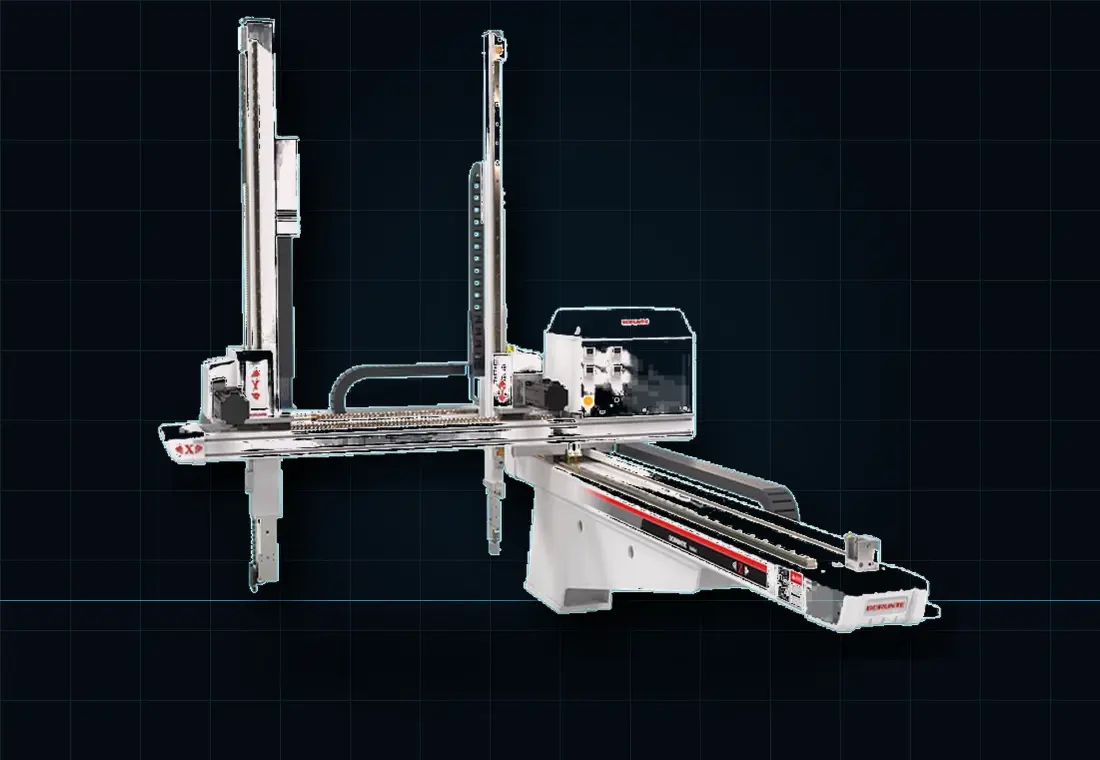
The robot is one element in a coordinated production system. The strongest result comes from defining the product, mould sequence and next operation together.
Finished parts, runners and rejects can be routed separately for packing, regrind or quarantine.
Repeatable pick and release sequences reduce operator access around the mould area.
Sensors or vision can check that the expected part and sprue are present before the next cycle proceeds.
We define the equipment and interfaces required to turn a representative robot platform into a workable moulding-cell solution.
See how we integrate cellsWe establish whether separation happens in the mould, on the end effector, at a trim station or after controlled placement.
Motion, gripping and cutting forces are arranged so cosmetic or functional surfaces are not damaged during runner removal.
Sprues can be transferred to a guarded bin or granulator while finished components continue to inspection or packing.
Yes. A dual-arm manipulator or suitable end effector can capture both streams where the mould layout and release sequence permit it.
Yes, subject to the granulator location, infeed safety, material flow and any dust or noise controls required at the site.
Typical methods include vacuum switches, part-present sensors, weight checks or vision. The right method depends on the runner geometry and the consequence of a missed pick.
Send the machine details, part and sprue information, target cycle and a photo or video. We will define the next engineering step.