Ready for the next process
Parts leave the cell in the position, pitch and orientation required by downstream equipment.
Do more than remove the part. The take-out robot or a secondary six-axis robot can orient, space and place components so inspection, assembly, cooling and packing receive stable, repeatable input.
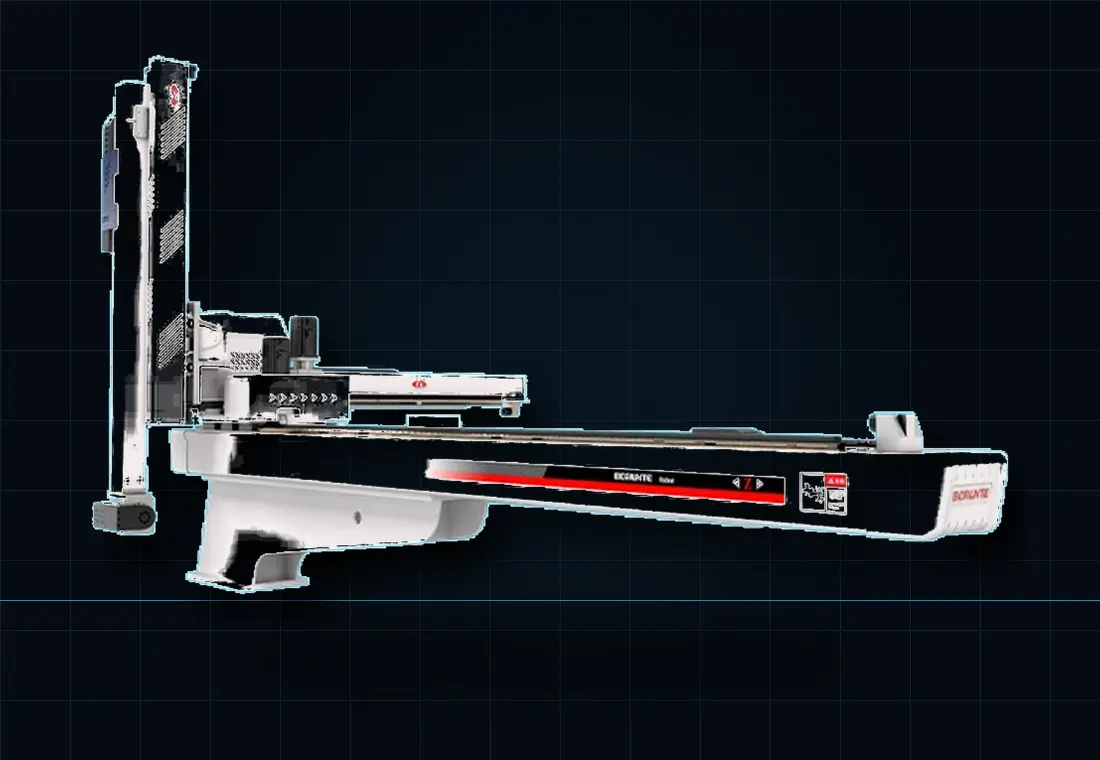
The robot is one element in a coordinated production system. The strongest result comes from defining the product, mould sequence and next operation together.
Parts leave the cell in the position, pitch and orientation required by downstream equipment.
Nests, conveyors or timed buffers can support hot or dimensionally sensitive parts during cooling.
Direct placement avoids random bulk collection followed by a second orienting operation.
We define the equipment and interfaces required to turn a representative robot platform into a workable moulding-cell solution.
See how we integrate cellsWe define the next process's position, orientation, rate and tolerance, then work backwards to the mould extraction.
Support, dwell time and grip pressure are assessed where parts may be flexible or dimensionally unstable immediately after moulding.
The robot sequence and buffer protect moulding output when inspection, assembly or packing has short interruptions.
Yes. The robot can follow fixed or recipe-driven tray patterns, with tray-present and full-tray checks integrated into the sequence.
We assess accumulation, multi-lane flow, buffering or parallel stations so downstream variation does not unnecessarily stop the moulding cycle.
Yes. Wrist axes, turnover stations or a secondary robot can establish the orientation needed for inspection, assembly or packaging.
Send the machine details, part and sprue information, target cycle and a photo or video. We will define the next engineering step.